
Falls: mitigate the risks for your business
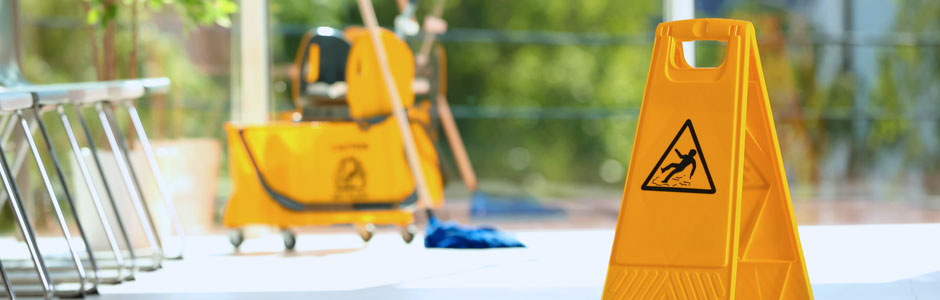
Mary had been running her coffee shop for 15 years without incident. Then, one February morning, a customer fell in the driveway, which was slippery because of all the slush. The result: a fractured wrist and three months off work. And for her, a claim that could have been avoided.
Falls are rarely just bad luck. They are almost always linked to negligence or procrastination. Here's how to mitigate these risks for your business.
Preventable accidents that come at a high cost
Falls rank first among causes of injury-related hospitalization in Canada—all age groups combined. In 2018, they alone accounted for $10.3B in costs, more than any other type of injury in the country. A considerable impact for accidents that are, in most cases, avoidable.
The most common causes of falls
Most falls have one thing in common: water. A freshly mopped floor, a damp carpet in the hallway, a puddle left behind by customers... it doesn't take much to make a surface slippery.
In winter, ice and snow exacerbate the problem in parking lots, staircases and landings, not to mention at the entrance to commercial buildings.
Other factors also increase risk:
- cracks, potholes or damaged surfaces
- objects or cables left on the ground
- stairs without handrails or non-slip surfaces
- inadequate lighting
What if someone gets hurt on your premises?
If someone is injured in a fall in your shop or on your company’s premises, you may be held civilly liable.
Civil liability refers to the legal obligation to compensate another person for harm caused by one’s fault or negligence.
Your company could be held liable if:
- the maintenance of the premises is deemed to have been neglected (an icy driveway where no abrasives were applied)
- your installations pose a hazard (missing handrail along a staircase or a loose floor mat)
- a known problem that was not corrected (damaged flooring)
Good habits for preventing falls
Indoors or out, mitigating risks starts with the basics.
Indoors
- Install non-slip floor coverings and mats in high-risk areas, making sure to securely fasten them.
- Clean up spills immediately. If maintenance has to be carried out during busy hours, clearly mark wet surfaces.
- Repair broken floors and landings as soon as possible.
- Keep aisles and high-traffic areas clear (no boxes, cables or objects on the floor). If there are wires on the floor, cover them to prevent tripping.
- Ensure adequate lighting in all high-traffic areas.
Outdoors
- Clear snow from driveways and parking lots regularly, especially after heavy snowfall.
- If necessary, use sand or salt as often as required.
- Check the condition of stairs, handrails and other surfaces, especially after periods of frost, and replace or repair any damage.
- Maintain good lighting around the building and change faulty bulbs as soon as possible.
- Inspect the parking lot often for potholes and cracks.
Commercial civil liability: be prepared!
Despite applying best practices, accidents happen. That's why preparation is just as important as prevention.
Here's how to protect your business:
- Check that you have adequate civil liability insurance coverage.
- Keep accurate records of sand and salt applications (dates, times, areas). They will serve as proof of due diligence.
- Keep an injury report form handy so you can record the facts of the accident.
- After a fall, take pictures of the scene and the shoes worn by the victim: these details are useful when piecing together what happened.
Prevention is based on simple gestures: constant maintenance, safe installations and vigilance. These measures protect your customers, your suppliers, your employees and your business.
When it comes down to it, it’s always better to say ‘I did’ rather than ‘I should have’.
Published on February 6, 2026